
Your Creature Brain & Love: The deepest Safety
- September 22, 2025
Your Creature Brain & Love: The Deepest Safety
Ever have one of those days where you feel on edge? Everything is just too loud, too bright, too much. Your patience is thin, and you feel wired.
Then, you meet up with your person. Your partner, your best friend, your sibling. You talk for a bit, maybe share a hug, and slowly… you feel yourself settle. Your shoulders drop. You take a deep breath for what feels like the first time all day.
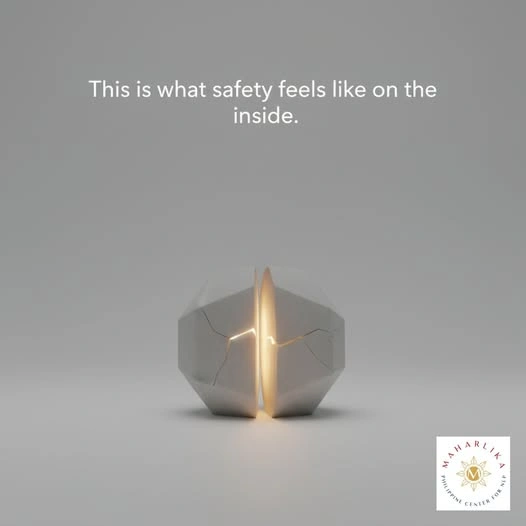
What’s happening in that moment isn’t just a mood shift. It’s something far more profound happening deep within your biology. It’s your Creature Brain realizing it’s finally safe.
We all have this ancient part of our brain. It’s not the part that does your taxes or plans your vacation. It’s the part that runs the show from the shadows: it keeps your heart beating, makes you jump at a loud noise, and fuels the instinct to protect those you love. Its sole, powerful purpose is to keep you alive and safe.
And it takes that job incredibly seriously.
This part of us is a master of survival, honed over millions of years. Its genius lies in its simplicity: it would rather sound ten false alarms than miss one real threat. So, a critical email, a social slight, or a looming bill—while not a tiger—can still trigger its ancient defense systems. It floods your body with energy and focus, readying you to overcome a challenge. It’s a powerful, life-saving force, and yes, that constant vigilance can be exhausting.
But something magical happens when this fierce, protective part of us encounters love.
Love isn’t just a concept to the creature brain. It doesn’t understand poetry or promises. Instead, it recognizes love through a series of undeniable, tangible signals:
- The calm in your own body. When your partner walks in the room, your heart rate can actually slow to match theirs. Your stress hormones (cortisol) drop. Your nervous system shifts from “protect” to “connect.” This is the biological signature of trust. Your creature brain reads its own body and thinks, “No threat here. We can stand down.”
- The language of safety. A soft gaze, a warm tone of voice, a familiar laugh, a gentle touch—these are all primal signals that our creature brain understands perfectly. They mean “I am with like kind. I am not a threat. I am here to nurture.”
- The chemistry of connection. Loving touch triggers a powerful cocktail of neurochemicals. Oxytocin (the bonding hormone) floods the system, promoting feelings of trust, empathy, and attachment. Dopamine (the reward chemical) makes being with this person feel good, reinforcing the desire to connect.
In the presence of true love, the creature brain doesn’t need to be managed or controlled. It is satiated. It has found what it was ultimately looking for all along: a guarantee of safety.
This is why love isn’t a luxury. It’s a biological imperative. It’s the ultimate signal to our most ancient, protective selves that we are not alone. We are protected. We are part of a tribe. We are home.
So the next time you feel that sense of deep, quiet calm with someone, know that it’s more than a feeling. It’s your oldest, most primal self—your loyal inner guardian—letting out a deep sigh of relief, finally recognizing its own reflection in the eyes of another.
#CreatureBrain #NervousSystem #Love #Psychology #MentalHealth #Relationships #AttachmentTheory #SelfCare #Mindfulness #InnerWork
Recent Blogs You Might Like



#CreatureBrain #NervousSystem #Love #Psychology #MentalHealth #Relationships #AttachmentTheory #SelfCare #Mindfulness #InnerWork
Your Creature Brain & Love: The deepest Safety
Your Creature Brain & Love: The Deepest Safety
Ever have one of those days where you feel on edge? Everything is just too loud, too bright, too much. Your patience is thin, and you feel wired.
Then, you meet up with your person. Your partner, your best friend, your sibling. You talk for a bit, maybe share a hug, and slowly… you feel yourself settle. Your shoulders drop. You take a deep breath for what feels like the first time all day.
What’s happening in that moment isn’t just a mood shift. It’s something far more profound happening deep within your biology. It’s your Creature Brain realizing it’s finally safe.
We all have this ancient part of our brain. It’s not the part that does your taxes or plans your vacation. It’s the part that runs the show from the shadows: it keeps your heart beating, makes you jump at a loud noise, and fuels the instinct to protect those you love. Its sole, powerful purpose is to keep you alive and safe.
And it takes that job incredibly seriously.
This part of us is a master of survival, honed over millions of years. Its genius lies in its simplicity: it would rather sound ten false alarms than miss one real threat. So, a critical email, a social slight, or a looming bill—while not a tiger—can still trigger its ancient defense systems. It floods your body with energy and focus, readying you to overcome a challenge. It’s a powerful, life-saving force, and yes, that constant vigilance can be exhausting.
But something magical happens when this fierce, protective part of us encounters love.
Love isn’t just a concept to the creature brain. It doesn’t understand poetry or promises. Instead, it recognizes love through a series of undeniable, tangible signals:
- The calm in your own body. When your partner walks in the room, your heart rate can actually slow to match theirs. Your stress hormones (cortisol) drop. Your nervous system shifts from “protect” to “connect.” This is the biological signature of trust. Your creature brain reads its own body and thinks, “No threat here. We can stand down.”
- The language of safety. A soft gaze, a warm tone of voice, a familiar laugh, a gentle touch—these are all primal signals that our creature brain understands perfectly. They mean “I am with like kind. I am not a threat. I am here to nurture.”
- The chemistry of connection. Loving touch triggers a powerful cocktail of neurochemicals. Oxytocin (the bonding hormone) floods the system, promoting feelings of trust, empathy, and attachment. Dopamine (the reward chemical) makes being with this person feel good, reinforcing the desire to connect.
In the presence of true love, the creature brain doesn’t need to be managed or controlled. It is satiated. It has found what it was ultimately looking for all along: a guarantee of safety.
This is why love isn’t a luxury. It’s a biological imperative. It’s the ultimate signal to our most ancient, protective selves that we are not alone. We are protected. We are part of a tribe. We are home.
So the next time you feel that sense of deep, quiet calm with someone, know that it’s more than a feeling. It’s your oldest, most primal self—your loyal inner guardian—letting out a deep sigh of relief, finally recognizing its own reflection in the eyes of another.
LATEST BLOGS