
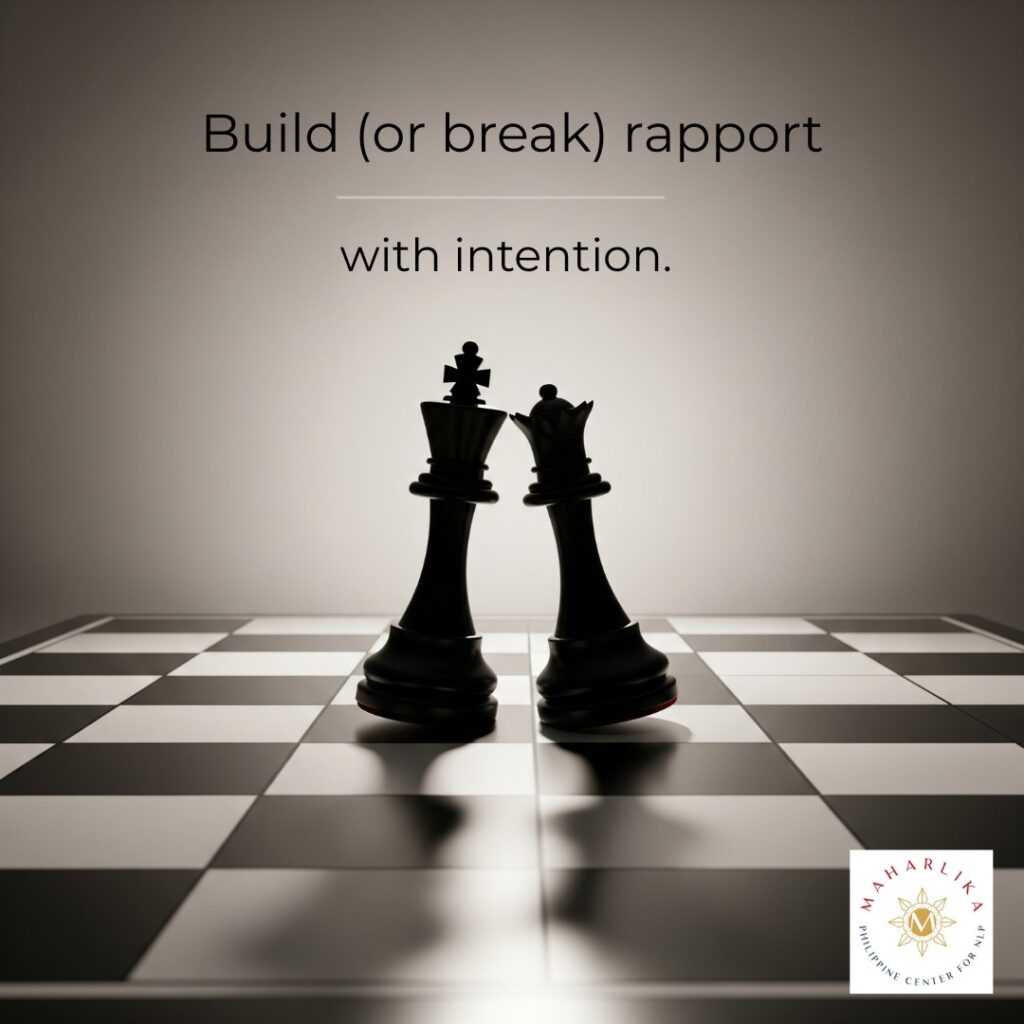
In both personal and professional relationships, rapport is the invisible glue that connects people. It creates trust, safety, and mutual understanding, making interactions smoother and more meaningful. But what exactly is rapport, how can you build it, and—perhaps just as importantly—how can you intentionally or accidentally break it?
What Is Rapport?
Rapport is a harmonious connection between people, marked by mutual trust, empathy, and a sense of psychological safety. When rapport is strong, people feel comfortable opening up, collaborating, and engaging in honest communication.
Why Does Rapport Matter?
Encourages openness – People share more when they feel safe with you.
Strengthens relationships – Deeper connections form through trust and understanding.
Enhances influence – People are more receptive to those they like and respect.
How to Build Rapport
1. Create a Safe Space
Be non-judgmental and approachable.
Use open body language (uncrossed arms, eye contact).
2. Practice Active Listening
Give your full attention—avoid distractions.
Reflect their words (“So what you’re saying is…”).
3. Match Their Energy & Style
Adjust your tone and pace to theirs (without mimicking).
If they’re formal, be professional; if casual, relax your approach.
4. Find Common Ground
Discover shared interests or experiences.
Use similarities to create connection.
5. Be Genuine
People sense insincerity—authenticity builds trust.
Admit mistakes—it humanizes you.
How to Break Rapport (Intentionally or Accidentally)
While rapport is usually beneficial, there are times when you may need to intentionally distance yourself—such as ending an overly long conversation to attend a meeting. Here’s how rapport breaks down:
Unintentional Rapport Breakers:
 Ignoring or interrupting – Signals disinterest. Mismatched energy – Being too loud/quiet compared to them. Over-sharing or dominating – Makes the other person feel unheard.
When You Might Choose to Break Rapport:
 Setting boundaries – Politely exiting a conversation when needed. Shifting dynamics – Redirecting an unproductive discussion.
The key? If you know how to build rapport, you also have the power to consciously adjust it when necessary.
Final Thought
Rapport is about trust, safety, and connection—but it’s also a skill you can adapt as needed. By mastering both building and gently breaking rapport, you maintain control over your interactions in a way that respects both yourself and others.