

The Children who don't cry are the ones who worry me the most
- September 19, 2025
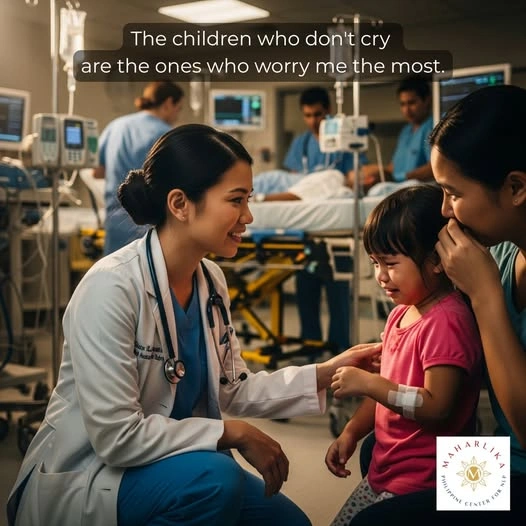
One lesson from my NLP studies has never left me. It was a story about a mother who rushed her three-year-old daughter to the emergency room after a bad fall left the child’s arm broken.
One lesson from my NLP studies has never left me. It was a story about a mother who rushed her three-year-old daughter to the emergency room after a bad fall left the child’s arm broken.The little girl was terrified, screaming and crying so hard she could barely breathe. She flailed and shrank away every time a doctor approached, her small body rigid with pain and fear.Flustered and embarrassed by the disruption, the mother began to apologize profusely to the attending physician.The doctor gently stopped her. “Please, don’t apologize,” he said, his eyes kind. “In fact, I’m glad to see her reacting this way. This fight, this noise—it tells me her spirit is strong. She is fighting to feel safe, and that is a powerful survival instinct. The children who truly worry me are the silent ones. The ones who are too scared or too broken to even cry. That’s when we know something is deeply wrong.”This story isn’t a blanket endorsement of all outbursts, nor a judgment on quiet children. It is a specific, powerful lesson about listening to the context of behavior. It reminds us that in moments of genuine fear or pain, a fight response can be a sign of a strong spirit, and that we must pay special attention to those who suffer in silence. It’s a call for empathy.
One lesson from my NLP studies has never left me. It was a story about a mother who rushed her three-year-old daughter to the emergency room after a bad fall left the child’s arm broken.
The little girl was terrified, screaming and crying so hard she could barely breathe. She flailed and shrank away every time a doctor approached, her small body rigid with pain and fear.
Flustered and embarrassed by the disruption, the mother began to apologize profusely to the attending physician.
The doctor gently stopped her. “Please, don’t apologize,” he said, his eyes kind. “In fact, I’m glad to see her reacting this way. This fight, this noise—it tells me her spirit is strong. She is fighting to feel safe, and that is a powerful survival instinct. The children who truly worry me are the silent ones. The ones who are too scared or too broken to even cry. That’s when we know something is deeply wrong.”
This story isn’t a blanket endorsement of all outbursts, nor a judgment on quiet children. It is a specific, powerful lesson about listening to the context of behavior. It reminds us that in moments of genuine fear or pain, a fight response can be a sign of a strong spirit, and that we must pay special attention to those who suffer in silence. It’s a call for empathy.
Recent Blogs You Might Like

It happens to everyone. Someone's words or actions land in a way that makes you feel small. Overlooked. Dismissed. Disrespected....
-From "Why" to "How": The NLP Shift That Drives Real Change- Neuro-Linguistic Programming (NLP) emphasizes that asking "How?" is far...

The belief that genius is innate is perhaps the greatest limitation to human potential. Neuro-Linguistic Programming (NLP) shatters this myth...
The Children who don’t cry are the ones who worry me the most
One lesson from my NLP studies has never left me. It was a story about a mother who rushed her three-year-old daughter to the emergency room after a bad fall left the child’s arm broken.The little girl was terrified, screaming and crying so hard she could barely breathe. She flailed and shrank away every time a doctor approached, her small body rigid with pain and fear.Flustered and embarrassed by the disruption, the mother began to apologize profusely to the attending physician.The doctor gently stopped her. “Please, don’t apologize,” he said, his eyes kind. “In fact, I’m glad to see her reacting this way. This fight, this noise—it tells me her spirit is strong. She is fighting to feel safe, and that is a powerful survival instinct. The children who truly worry me are the silent ones. The ones who are too scared or too broken to even cry. That’s when we know something is deeply wrong.”This story isn’t a blanket endorsement of all outbursts, nor a judgment on quiet children. It is a specific, powerful lesson about listening to the context of behavior. It reminds us that in moments of genuine fear or pain, a fight response can be a sign of a strong spirit, and that we must pay special attention to those who suffer in silence. It’s a call for empathy.
One lesson from my NLP studies has never left me. It was a story about a mother who rushed her three-year-old daughter to the emergency room after a bad fall left the child’s arm broken.
The little girl was terrified, screaming and crying so hard she could barely breathe. She flailed and shrank away every time a doctor approached, her small body rigid with pain and fear.
Flustered and embarrassed by the disruption, the mother began to apologize profusely to the attending physician.
The doctor gently stopped her. “Please, don’t apologize,” he said, his eyes kind. “In fact, I’m glad to see her reacting this way. This fight, this noise—it tells me her spirit is strong. She is fighting to feel safe, and that is a powerful survival instinct. The children who truly worry me are the silent ones. The ones who are too scared or too broken to even cry. That’s when we know something is deeply wrong.”
This story isn’t a blanket endorsement of all outbursts, nor a judgment on quiet children. It is a specific, powerful lesson about listening to the context of behavior. It reminds us that in moments of genuine fear or pain, a fight response can be a sign of a strong spirit, and that we must pay special attention to those who suffer in silence. It’s a call for empathy.
LATEST BLOGS
-From "Why" to "How": The NLP Shift That Drives Real Change- Neuro-Linguistic Programming (NLP) emphasizes that asking "How?"

We all know Atticus Finch as the pillar of morality in Harper Lee's To Kill a Mockingbird. We
For a partnership to succeed, the partners need to carefully reevaluate the values and the patterns that they've