

How to Get Unstuck Without Losing Your Mind
- August 21, 2025
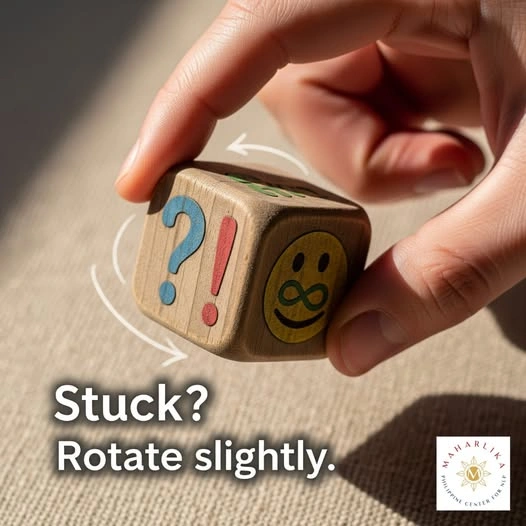
We’ve all been there:
That argument where you keep repeating the same point louder
That work problem you approach the same way, hoping for magic
That habit you swear you’ll change… right after this one last time
Here’s the thing: Getting unstuck isn’t about perfection—it’s about interrupting the trance of “this is how I do things.”
Why We Stay Stuck (Even When We Know Better)
Our brains love autopilot. It’s efficient! Until suddenly:
☞ You’re reusing the same broken tool because it’s familiar (even if it never works)
☞ You see the rut… but change feels scarier than staying put
☞ More options don’t free you—they just paralyze you further
The Gentle Way Out
1. Build Your “Options Muscle” (Without Overwhelm)
• Copy ideas from people who handle similar situations well
• File away 2-3 actual alternatives you’d try when stuck
• Watch for “research paralysis”—collecting options isn’t the same as using them
2. Catch the Death-Grip Early
Your body signals first:
• That heat in your cheeks or clench in your jaw
• The mental loop: “If I just try harder THIS time…”
• The exhaustion of forcing what isn’t working
3. Tiny Experiments Beat Big Overhauls
Try swapping:
→ Overthinking → “What’s the simplest next step?”
→ Avoidance → Share one true thought
→ Perfectionism → “Done > Perfect” (even if it stings)
~~~~~
Progress isn’t linear—it’s catching yourself mid-spiral sometimes
And small shifts compound. One honest sentence today changes next month’s conversations
You don’t need more willpower. You need a slightly different script.
Recent Blogs You Might Like



How to Get Unstuck Without Losing Your Mind
We’ve all been there:
That argument where you keep repeating the same point louder
That work problem you approach the same way, hoping for magic
That habit you swear you’ll change… right after this one last time
Here’s the thing: Getting unstuck isn’t about perfection—it’s about interrupting the trance of “this is how I do things.”
Why We Stay Stuck (Even When We Know Better)
Our brains love autopilot. It’s efficient! Until suddenly:
☞ You’re reusing the same broken tool because it’s familiar (even if it never works)
☞ You see the rut… but change feels scarier than staying put
☞ More options don’t free you—they just paralyze you further
The Gentle Way Out
1. Build Your “Options Muscle” (Without Overwhelm)
• Copy ideas from people who handle similar situations well
• File away 2-3 actual alternatives you’d try when stuck
• Watch for “research paralysis”—collecting options isn’t the same as using them
2. Catch the Death-Grip Early
Your body signals first:
• That heat in your cheeks or clench in your jaw
• The mental loop: “If I just try harder THIS time…”
• The exhaustion of forcing what isn’t working
3. Tiny Experiments Beat Big Overhauls
Try swapping:
→ Overthinking → “What’s the simplest next step?”
→ Avoidance → Share one true thought
→ Perfectionism → “Done > Perfect” (even if it stings)
~~~~~
Progress isn’t linear—it’s catching yourself mid-spiral sometimes
And small shifts compound. One honest sentence today changes next month’s conversations
You don’t need more willpower. You need a slightly different script.
LATEST BLOGS