

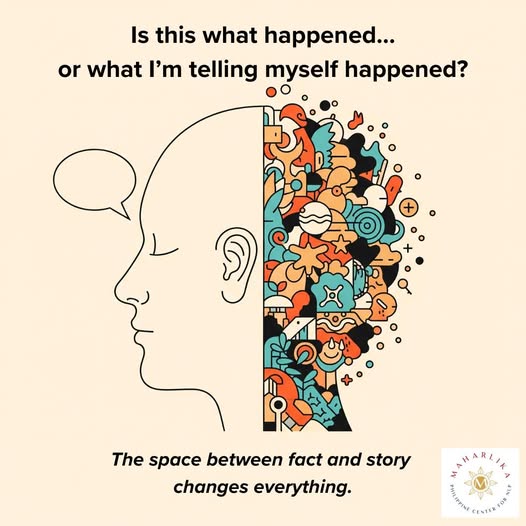
Have you ever noticed how two people can experience the same moment but walk away with completely different feelings about it?
Our minds are always processing two kinds of information:
 What actually happened – The words spoken, the tone used, the things we saw or heard (things others could verify).
 The story we tell ourselves about it – The meanings, assumptions, and emotions we attach to those moments.
The first is like the raw data of life—neutral and observable. The second is where our humanity comes in, coloring everything with our past experiences, fears, and hopes.
This subtle difference matters because so much of our stress, confusion, and conflict comes from mistaking our stories for facts.
Examples to Try Today
 At Home: Your partner sighs while doing dishes.
Sensory: They sighed.
Story: “They’re annoyed with me.” (Maybe they’re just tired, or lost in thought!)
 At Work: Your boss emails, “Let’s discuss your project tomorrow.”
Sensory: They requested a meeting.
Story: “I must have done something wrong.” (Or maybe they just want to collaborate!)
What if, the next time we felt upset or defensive, we paused and gently asked ourselves:
“Is this what happened, or is this what I’m telling myself about what happened?”
That tiny space of awareness can change everything—how we listen, how we love, and how we move through the world.