
Ever notice how your mind fills in the blanks... and sometimes gets it totally wrong?
Like when your teammate doesn’t reply to your message right away, and suddenly you’re wondering if they’re mad at you. Or when your partner’s quieter than usual over dinner, and you’re mentally replaying everything you’ve said in the last 48 hours. Been there.
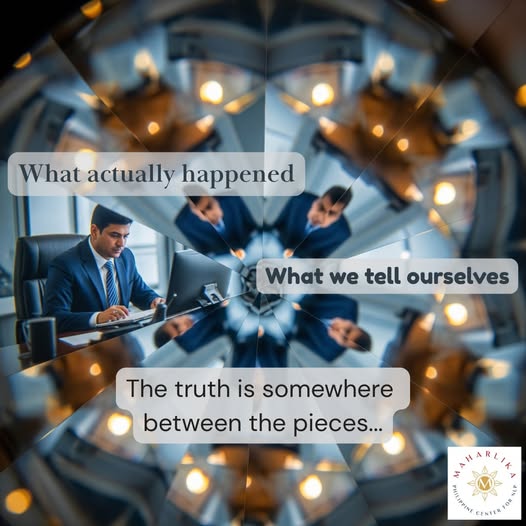
Ever notice how your mind fills in the blanks… and sometimes gets it totally wrong?
Like when your teammate doesn’t reply to your message right away, and suddenly you’re wondering if they’re mad at you. Or when your partner’s quieter than usual over dinner, and you’re mentally replaying everything you’ve said in the last 48 hours. Been there.
Here’s the thing – our brains are meaning-making machines. They take incomplete information and spin it into full stories.
Sometimes this helps us:
• That gut feeling that says “this project could be amazing” before all the pieces are in place
• Noticing your friend’s tone sounds off and asking if they’re okay
• Imagining how much better things could be a year from now
But sometimes our brain’s storytelling goes sideways:
• Taking a two-word email reply as proof your boss is disappointed
• Hearing “we need to talk” and immediately assuming the worst
• Deciding someone doesn’t like you because they didn’t smile in the hallway
What helps? Pausing just long enough to ask:
“Is this fact… or is this my brain doing its creative writing exercise?”
Most of the time, the story in our head is just one possible version. The truth is usually less dramatic (and way less personal) than we imagine.
Next time you catch yourself writing a mental script, maybe try:
• Shooting a quick “Everything good?” instead of agonizing
• Reminding yourself that other people have entire lives happening off-screen
• Giving the benefit of the doubt – first to others, but especially to yourself
We’re all out here interpreting incomplete data every single day. Sometimes we nail it, sometimes we miss by a mile. The magic is in catching ourselves mid-story and remembering we get to edit the narrative we tell ourselves.
Recent Blogs You Might Like

It happens to everyone. Someone's words or actions land in a way that makes you feel small. Overlooked. Dismissed. Disrespected....

-From "Why" to "How": The NLP Shift That Drives Real Change- Neuro-Linguistic Programming (NLP) emphasizes that asking "How?" is far...

The belief that genius is innate is perhaps the greatest limitation to human potential. Neuro-Linguistic Programming (NLP) shatters this myth...