

The Magic Number 7: Why Your Brain Loses Stuff (And Where It Actually Goes)
Ever walked into a room and immediately forgot why? Or struggled to remember a phone number without writing it down? There’s a scientific reason for this—and it reveals how your brain really handles information.
Ever walked into a room and immediately forgot why? Or struggled to remember a phone number without writing it down? There’s a scientific reason for this—and it reveals how your brain really handles information.
Your Brain’s Inbox is Full (7 ± 2 ItemsMax)
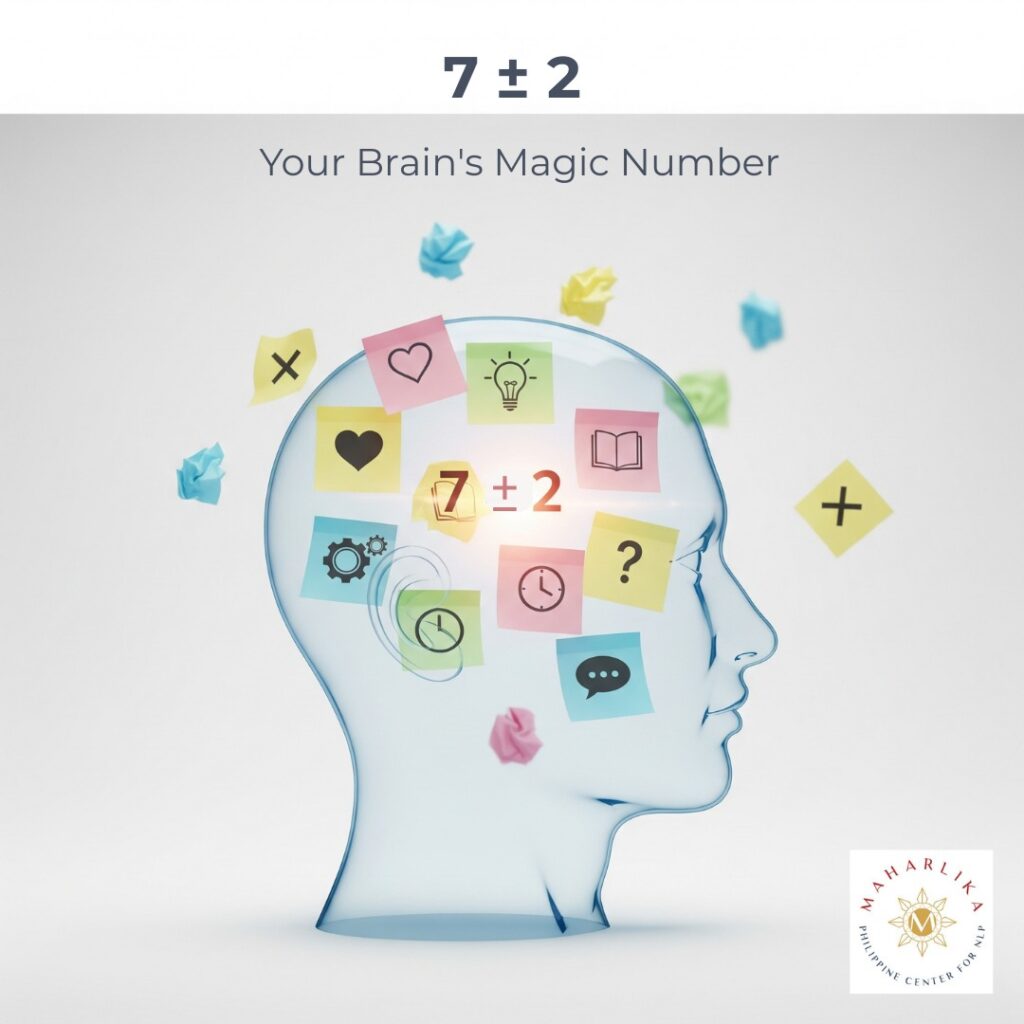
Back in 1956, psychologist George Miller discovered that our working memory—the brain’s “holding area”—can only manage about 7 things at once (give or take 2). This explains why:
• Phone numbers were originally 7 digits
• You can remember about 5-7 groceries without a list
• The best presentations stick to 3-5 key points
But here’s the real question: If we can only hold 7 things at once, where does everything else go?
Your Brain’s Storage System
1. Sensory Memory (The Spam Folder)
◦ Holds sights/sounds for seconds before deleting
◦ Ever “heard” something after it stopped? That’s sensory memory
2. Working Memory (The Desktop)
◦ Your 7±2 mental sticky notes
◦ Gets wiped clean unless you actively work with the info
3. Long-Term Memory (The Hard Drive)
◦ Important stuff gets saved here
◦ But your brain is picky—it only keeps what feels meaningful or repeated
What Makes Something “Meaningful to Your Brain?
Your brain doesn’t treat all information equally. It prioritizes what’s meaningful—but what does that actually mean?
• Emotional Impact: Strong emotions (joy, fear, surprise) act like mental highlighters. That’s why you remember your first kiss but not what you ate for lunch three weeks ago.
• Personal Relevance: Information tied to you sticks better. Your own birthday? Easy. A random historical date? Harder.
• Patterns & Connections: Your brain loves linking new info to what it already knows. Learning Spanish is easier if you already speak Italian.
• Survival Value: Even subconsciously, your brain flags things that might be useful (e.g., where the exits are in a new building).
• Novelty: Unusual or unexpected things stand out. That’s why you remember the new girl with the fuchsia lipstick.
How to Make it Work
Make It Matter: Tie new info to something you care about (e.g., learning a language by watching your favorite show in Spanish).
Tell a Story: Facts embedded in narratives stick better.
Sleep On It: Memories get “saved” properly during sleep.
Write It Down: Your brain’s not designed to be a notepad.
Fun Fact: Some research suggests our modern attention spans might have shrunk the magic number to just 4±1 items. So if you forget why you opened your fridge, don’t worry—your brain’s just doing its job!
Ever noticed how some random childhood memories suddenly pop up? That’s your brain’s weird filing system at work.
Recent Blogs You Might Like

It happens to everyone. Someone's words or actions land in a way that makes you feel small. Overlooked. Dismissed. Disrespected....

-From "Why" to "How": The NLP Shift That Drives Real Change- Neuro-Linguistic Programming (NLP) emphasizes that asking "How?" is far...

The belief that genius is innate is perhaps the greatest limitation to human potential. Neuro-Linguistic Programming (NLP) shatters this myth...