
Team Energy Low? Change the Frame, Change the Game!
Ever had a team member say, “This change is going to be a disaster,” or a manager complain, “My team is just resistant”?
It’s easy to get stuck in a negativity spiral. But what if you could flip the script—not just for yourself, but for your entire team?
You can! It’s called Reframing, and it’s one of the most powerful tools in your leadership toolkit. It’s not about ignoring problems. It’s about shifting perspectives to active solutions and momentum.
Why Reframing is a Superpower for Leaders
Your words as a leader don’t just describe reality—they shape it. The frames you use directly influence your team’s energy, creativity, and willingness to engage.
Reframing helps you:
• Turn resistance into curiosity.
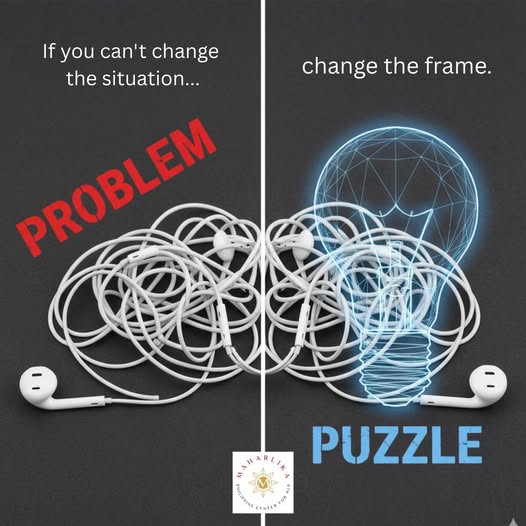
• Transform problems into puzzles.
• Shift complaints into collaborations.
Ready to play? Let’s reframe some classic workplace dramas!
The Leadership Reframe Challenge: Before & After
Situation 1: “My team is resistant to this new process.”
Old Frame: “They’re being difficult. They just don’t get it.”
Leadership Reframe: “My team is cautious and wants to understand the why. They care about getting this right. How can I better communicate the benefits and listen to their concerns?”
The Shift: From resistance to engagement.
Situation 2: “This project failed.”
Old Frame: “We wasted time and money.”
Leadership Reframe: “We just conducted a highly informative (and expensive!) research project. What did we learn that will make Version 2 a massive success?”
The Shift: From failure to R&D.
Situation 3: “An employee is always criticizing ideas in meetings.”
Old Frame: “They’re being negative and shutting down innovation.”
Leadership Reframe: “This person has a natural talent for risk-assessment. How
can I channel their critical eye to help us stress-test ideas before we launch, instead of during brainstorming?”
The Shift: From critic to valuable safeguard.
Your 3-Step Guide to Leadership Reframing
Listen for the Fame: Pay attention to the language you and your team use. Words like “failure,” “resistant,” “problem,” and “disaster” are clues that a unhelpful frame is in play.
Pause and Ask: Hit the mental pause button. Ask yourself: “What’s another way to see this that is more accurate and more useful?”
Choose and Communicate the New Frame: Introduce the new perspective with confidence and curiosity. Use phrases like:
“What if we looked at it like…”
“Another way to see this could be…”
“I appreciate that perspective. What if we also considered…”
You’re not being overly optimistic. You’re being strategically optimistic—and that’s what inspires teams to move forward.
Recent Blogs You Might Like

It happens to everyone. Someone's words or actions land in a way that makes you feel small. Overlooked. Dismissed. Disrespected....

-From "Why" to "How": The NLP Shift That Drives Real Change- Neuro-Linguistic Programming (NLP) emphasizes that asking "How?" is far...

The belief that genius is innate is perhaps the greatest limitation to human potential. Neuro-Linguistic Programming (NLP) shatters this myth...