
A Reflection on True Love: Seeing the Other as They Are
How often do we say we love someone, yet secretly wish they were just a little bit more… like us? We want them to share our hobbies, our opinions, our life goals. We see their potential and, with the best intentions, try to “help” them reach it—often a version we’ve designed for them.
How often do we say we love someone, yet secretly wish they were just a little bit more… like us? We want them to share our hobbies, our opinions, our life goals. We see their potential and, with the best intentions, try to “help” them reach it—often a version we’ve designed for them.
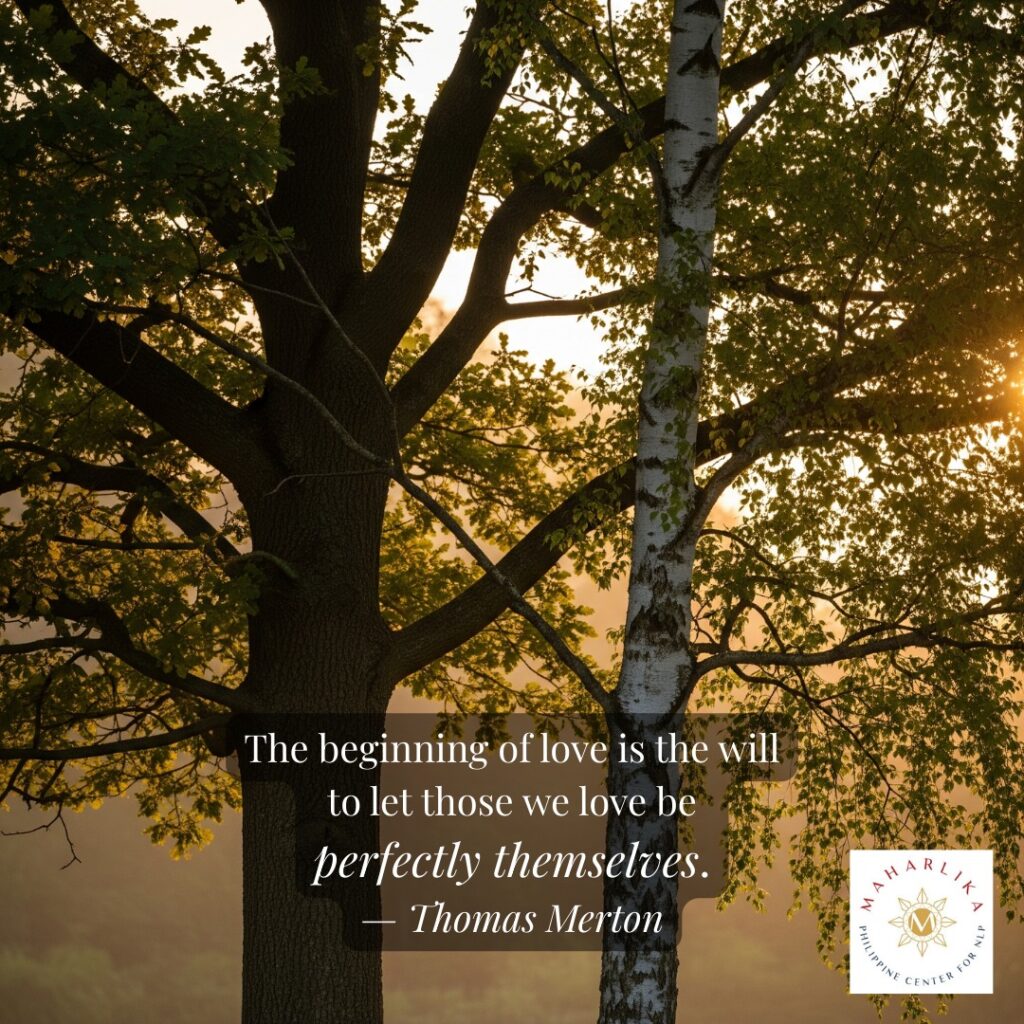
This profound quote by Thomas Merton, the Trappist monk and spiritual writer, has always stopped me in my tracks. It challenges the very foundation of how we love:
“The beginning of love is the will to let those we love be perfectly themselves, the resolution not to twist them to fit our own image. If in loving them we do not love what they are, but only their potential likeness to ourselves, then we do not love them: we only love the reflections of ourselves we find in them.”
Let that sink in for a moment.
Merton isn’t talking about a passive love. He calls it a “will,” a “resolution.” This means true love is an active, daily choice. It’s a conscious decision to step back, to release our grip, and to create a space where the other person can exist authentically, without the pressure to conform to our expectations.
It’s about loving them—their unique spirit, their quirks, their dreams (even if they differ from our own), and their journey—not just the parts of them that mirror us or make us feel comfortable.
This applies to all our relationships:
romantic Partners: Loving them for who they are today, not the “fixed” or “improved” version you hope they’ll become.
Children: Nurturing their unique talents and passions, even if they aren’t the ones we would have chosen for them.
Friends & Family: Supporting their choices and paths without imposing our own blueprint for happiness.
When we love only someone’s “potential likeness to ourselves,” we turn them into a mirror. We are, in the end, just admiring our own reflection. That isn’t love for the other person; it’s a form of self-love.
So perhaps let’s ask – of others and of ourselves:
Am I loving this person for who they truly are, or for who I want them to be?
Am I creating a space where they can be perfectly, authentically themselves?
It’s perhaps the hardest and most beautiful work of love.
Recent Blogs You Might Like

It happens to everyone. Someone's words or actions land in a way that makes you feel small. Overlooked. Dismissed. Disrespected....

-From "Why" to "How": The NLP Shift That Drives Real Change- Neuro-Linguistic Programming (NLP) emphasizes that asking "How?" is far...

The belief that genius is innate is perhaps the greatest limitation to human potential. Neuro-Linguistic Programming (NLP) shatters this myth...