
What Does "Can't" Really Mean?
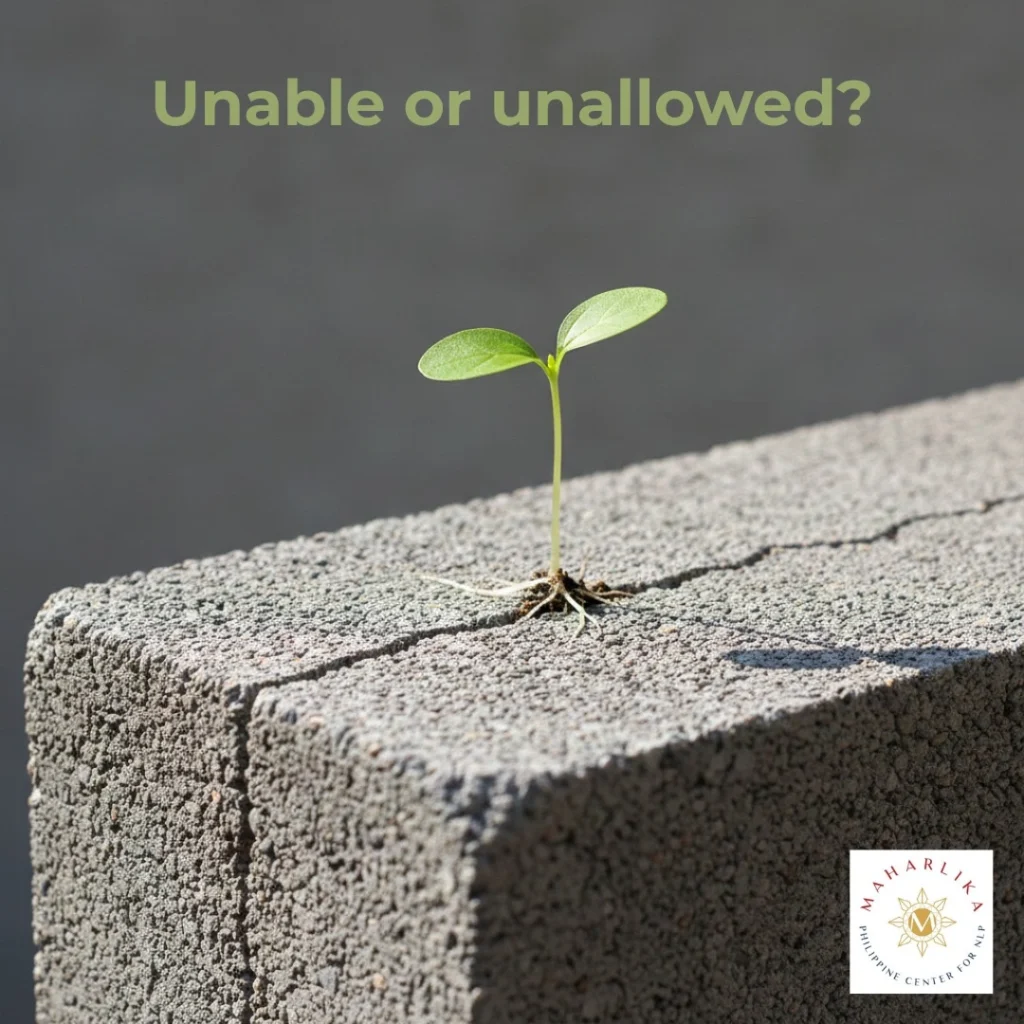
We hear it all the time. We say it all the time. “I can’t.”
But have you ever stopped to think about which kind of “can’t” you’re actually saying? Or hearing?
That tiny, powerful word usually means one of two very different things:
1. "I'm not able to."
This is a matter of skill, knowledge, or capacity.
- “I can’t speak Mandarin.” (Haven’t learned it yet)
- “I can’t lift 500 pounds.” (Physical limitation
- “I can’t solve this complex equation.” (Current understanding)
This “can’t” is often about temporary limits. With time, training, or help, it might become “can.”
2. "I'm not allowed to."
This is a matter of permission, rules, or boundaries.
- “I can’t share that confidential information.” (Company policy)
- “You can’t park here.” (City ordinance)
- “I can’t stay out past midnight.” (House rule)
This “can’t” is about external constraints or choices.
Why does this distinction matter?
Because it helps you identify the true obstacle. And you can’t find a solution until you know exactly what you’re dealing with.
When you hear “can’t,” pause. Ask yourself: “Is this a barrier of ability, or a barrier of permission?”
If it’s about ability, you can ask: “What would it take to be able?” Is it a question of learning, practice, or finding a new approach?
If it’s about permission, you can ask: “Who made the rule?” “Is it negotiable?” “Is this a boundary I respect, or one I need to challenge?”
Understanding the “why” behind the “can’t” gives you clarity. It turns a dead-end into a crossroads with possible paths forward.
Next time you’re about to say “I can’t,” check in. Which one is it?
And when you hear it from someone else, maybe the most powerful question you can ask is: “Do you mean you’re not able to, or not allowed to?”
The answer might just open a door.
#TheTwoCants #BetterConversations #GrowthMindset #CriticalThinking
Recent Blogs You Might Like