

NLP Submodalities: The Hidden Settings of Your Mind
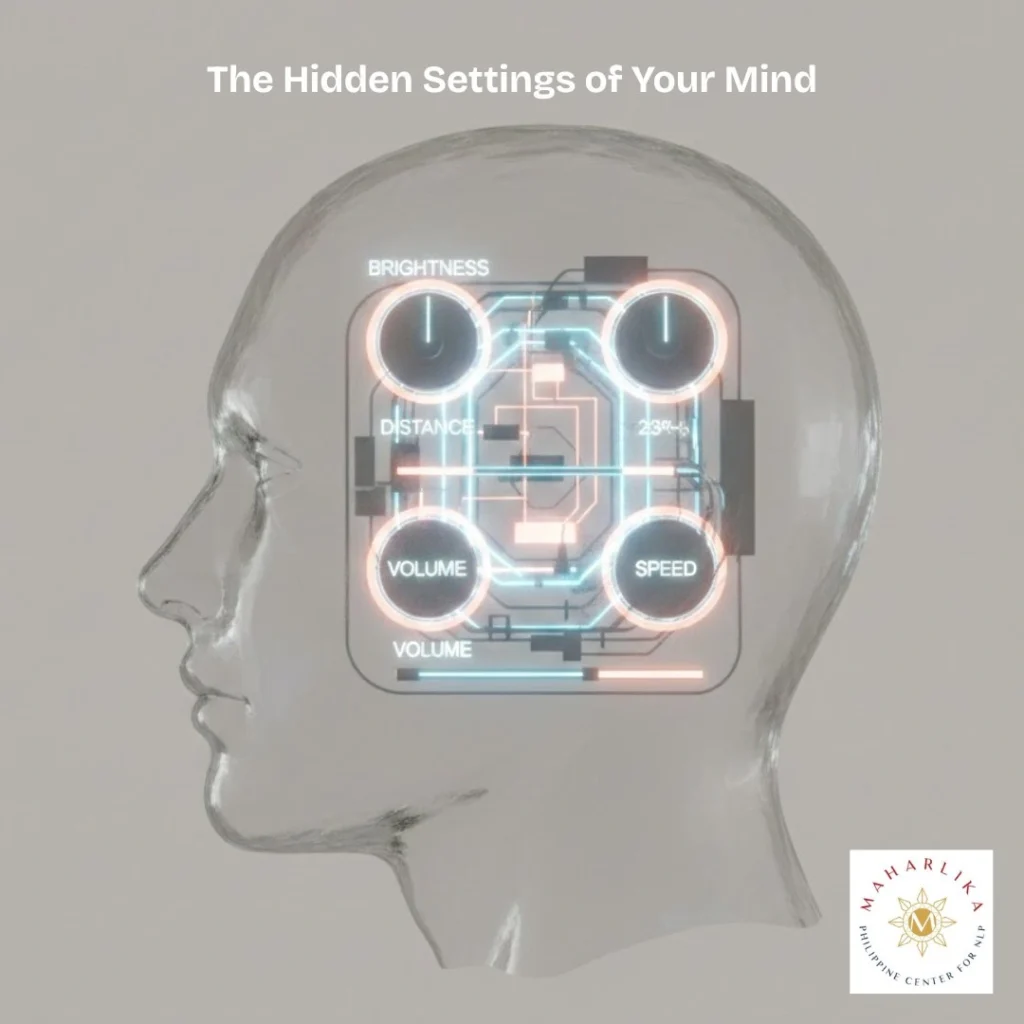
The Practical Bits: Your Mind’s Knobs and Dials
Visual: Is the picture in your mind bright or dim? Close or far? A movie or a snapshot?
Auditory: Is the voice in your head loud or soft? Fast or slow? Coming from one side or right in the center?
Kinesthetic (Feelings): Does the feeling have a texture? A temperature? A weight or location in your body?
How to Use This Today (No Positive Thinking Required)
This isn’t about forcing happy thoughts. It’s about adjusting the properties of the thoughts you already have.
1. Take the Sting Out of a Bad Memory.
Think of a mildly annoying memory. Notice the picture in your mind.
Now, mentally do this: Push the picture farther away. Drain the color out until it’s black and white. See if you can make it smaller, like a postage stamp.
Check the feeling that goes with it. For most people, it weakens. The fact of the memory hasn’t changed, but its emotional charge has been dialed down.
2. Turn Up the Volume on Motivation.
Think of a task you know you should do but keep putting off.
Now, think of something you are genuinely, easily motivated to do (like meeting a friend, eating a favorite meal). Notice the qualities of that motivating thought. Is it a bright, close picture? Is there an upbeat soundtrack?
Apply those same qualities to the thought of the procrastinated task. Make the mental picture of doing it brighter, closer, and add that same soundtrack. Just experiment. Does the feeling about the task shift, even slightly?
3. Disrupt Your Inner Critic.
Notice the voice that says “you’ll mess up.” What are its properties?
Now, change the submodalities. Make the voice sound silly, like a cartoon character. Slow it way down until it drags. Turn the volume down to a whisper.
By changing the sound of the criticism, you disrupt its power. It becomes data, not a command.
The Point Is This:
You are already running your brain. Submodalities help you become aware of the controls. It’s subtle tinkering, not a magic fix. The goal is flexibility—if a thought pattern isn’t serving you, you have permission to adjust the settings.
Try it. Pick one thing. Notice the details of how you think about it, and change a property. See what happens. It’s your own mind. You might as well learn how some of the buttons work.
#NLP #MindTools #SelfAwareness #MentalHealth #PracticalPsychology
Recent Blogs You Might Like